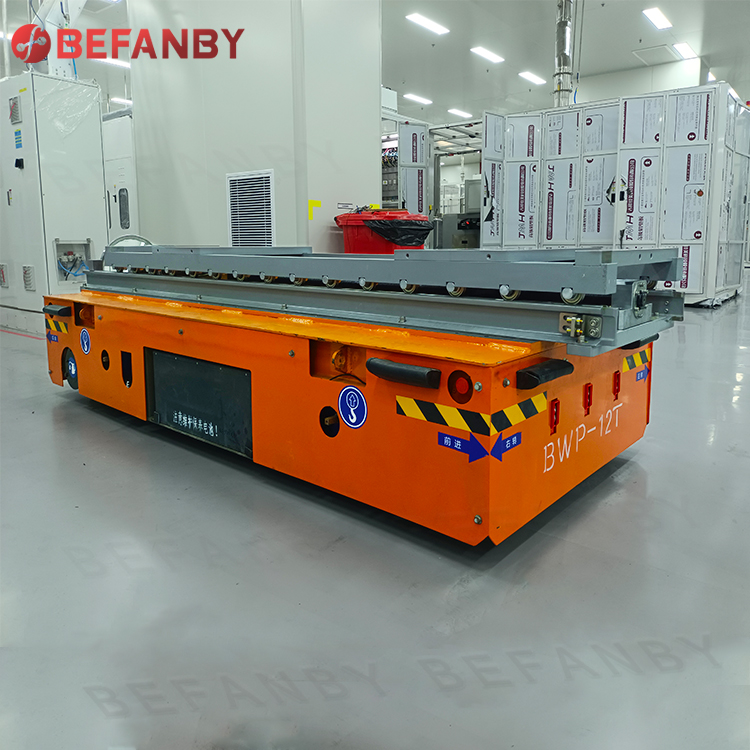
**Innovative Hot Ladle Transfer Cart Enhances Steel Plant Efficiency**In the ever-evolving steel manufacturing industry, technological advancements continue to play a crucial role in optimizing production processes and ensuring safety. One such advancement is the introduction of the Hot Ladle Transfer Cart, a state-of-the-art solution designed to improve the transportation of molten metal within steel plants. This innovation addresses several challenges faced by steel manufacturers, offering enhanced performance, reliability, and operational efficiency.**Meeting the Demands of Modern Steel Manufacturing**Steel production involves the handling of extremely high-temperature materials, particularly molten metal transported between different stages such as from the ladle furnace to the continuous casting machine. Traditional methods for moving these ladles often involve overhead cranes or conventional transfer carts, which may face limitations in terms of load capacity, maneuverability, or safety.The Hot Ladle Transfer Cart has been developed to overcome these challenges by providing a purpose-built, robust platform capable of safely and efficiently transporting ladles carrying molten metal. Designed with cutting-edge engineering and high-grade materials, the cart withstands extreme thermal conditions and heavy loads, ensuring uninterrupted and safe operations.**Technical Features and Capabilities**This novel transfer cart is engineered to offer several key advantages:- **High Load Capacity:** Capable of carrying ladles loaded with several tons of molten metal, the cart ensures that large volumes can be transferred seamlessly, minimizing the number of trips and reducing operational downtime.- **Thermal Resilience:** Constructed with materials resistant to extreme heat, the transfer cart maintains structural integrity despite exposure to high temperatures in proximity to the molten metal ladles.- **Precision Mobility:** Equipped with advanced drive and control systems, the cart allows precise maneuvering within tight spaces of the steel plant, facilitating smooth transitions and alignment with furnaces or casting machines.- **Safety Enhancements:** The design incorporates multiple safety features such as automatic braking systems, emergency stop mechanisms, and thermal insulation to protect both the equipment and personnel.- **Maintenance Optimization:** The modular design enables simplified maintenance routines, reducing the time and cost associated with upkeep while ensuring long service life.**Integration within Steel Plant Operations**Integrating the Hot Ladle Transfer Cart into steel plant workflows not only elevates operational efficiency but also significantly enhances safety standards. By automating the transfer process and minimizing manual handling, the risk of accidents related to molten metal transportation is markedly decreased.In addition, the cart's compatibility with existing plant infrastructure allows for easy adoption without extensive modifications or disruptions to current production lines. Its adaptability means it can be tailored to various ladle sizes and plant layouts, offering a flexible solution suitable for diverse steel manufacturing environments.**Company’s Pioneering Role in Industrial Solutions**The development of the Hot Ladle Transfer Cart is a testament to the company’s commitment to innovation and excellence in industrial equipment manufacturing. With a rich history of delivering high-quality, reliable solutions for heavy industries, the company brings unmatched expertise and customer-centric design philosophy to each product.Specializing in custom-engineered transfer carts, electric locomotives, and related logistics equipment, the company serves a broad customer base spanning steel, metallurgy, chemical, and mining sectors. Its dedication to research and development ensures the integration of the latest technologies and industry best practices, positioning the company as a leader in the field.By collaborating closely with clients, the company customizes products to meet specific operational demands, thereby maximizing customer satisfaction and operational performance. Extensive after-sales support, including maintenance services and technical training, further reinforces long-term partnerships and ensures optimal equipment utilization.**Environmental and Economic Benefits**Beyond operational efficiency, the Hot Ladle Transfer Cart contributes positively to environmental sustainability and cost-effectiveness. By reducing idle times and streamlining transfer cycles, the cart helps decrease energy consumption associated with handling operations.Fewer manual interventions translate to reduced risk of spillage or accidents that could harm the environment. Additionally, enhanced process continuity curbs production losses, thereby improving overall economic performance.**Looking Ahead: Transforming Steel Production**As the steel industry continues to face pressure to improve productivity, quality, and safety in a competitive global market, innovations such as the Hot Ladle Transfer Cart play an indispensable role. By facilitating safer and more efficient transfer of molten metal, this equipment supports the transformation of steel manufacturing into a more automated, reliable, and sustainable operation.The company’s ongoing investment in advanced technologies signals a bright future where industrial equipment not only meets the rigorous demands of modern steel plants but also drives continuous improvement and innovation across the sector.**Conclusion**The introduction of the Hot Ladle Transfer Cart marks a significant step forward in steel production logistics. Combining robust design, advanced technology, and user-focused features, this solution addresses critical challenges in molten metal transfer, enhancing safety, efficiency, and operational reliability.Backed by a company with deep industry knowledge and a passion for innovation, the Hot Ladle Transfer Cart stands out as a transformative product, setting new standards for the steel manufacturing industry’s equipment landscape. Steel plants adopting this technology can expect improved production workflows, reduced risks, and a solid foundation for future growth and advancement.
Read More